
Siloxanes
What are siloxanes?
Siloxanes are a class of synthetic chemicals used to produce silicone polymers – materials found in a wide range of products from cosmetics, such as shampoos and moisturizers, to cookware – as well as many other consumer products and industrial applications. There is mounting concern about the environmental and health hazards associated with siloxanes.1, 2
Siloxanes are often grouped based on properties like molecular structure (cyclic, circular in shape or linear, straight and chain-like), molecular weight, and volatility. Despite these differences, they all share a similar chemical backbone and many common characteristics.3
Volatile methyl siloxanes (VMS)
Cyclic and linear VMS
PDMS
How am I exposed to siloxanes?
Exposure to siloxanes is common because of their widespread use in industry and across sectors, resulting in their presence in consumer and professional products including cosmetics, personal care products, dry cleaning processes, cookware, waxes, cleaners, and more.1, 4
People are exposed to siloxanes from multiple sources, due in part to their volatility. Major exposure pathways include cosmetics and personal care products as well as contaminated indoor air and dust.4, 7, 8 Major exposure scenarios involve:
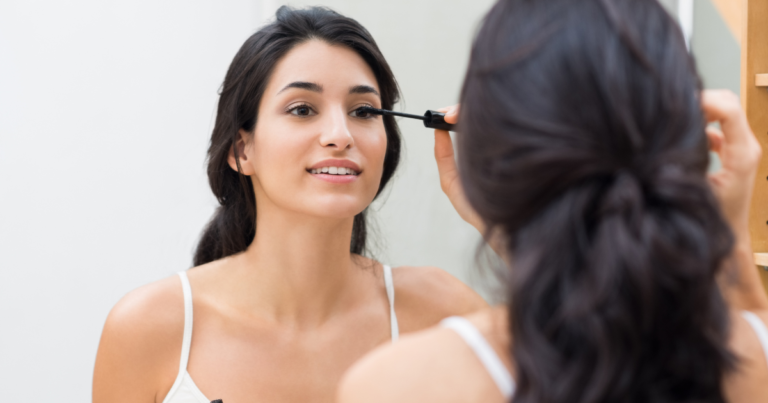
- Beauty and personal care products: Siloxanes are found in cosmetics including primer, lipstick, mascara, and foundation, and in personal care products like moisturizers, antiperspirants, sunscreen, shampoos, conditioners, and body wash.9 Applications include use as emollients and spreading agents.8 People are primarily exposed via inhalation and skin absorption during application and use of these products.8, 10 Furthermore, siloxanes are known to be used in haircare products marketed towards women of color, which may lead to disproportionate exposure.11
- Indoor air and dust: Siloxanes are contaminants of indoor air and dust because of their presence in consumer products and other materials and substances, leading to inhalation, ingestion, and dermal exposure.5, 7
Why should I be concerned?
Siloxanes are associated with multiple adverse health effects.1 The cyclic volatile methyl siloxanes (cVMS) commonly referred to as D4, D5, and D6 are linked to cancer, developmental and reproductive toxicity, endocrine disruption, and liver toxicity.1, 2 cVMS may be present in products containing PDMS or dimethicone.3, 6
Due to concerns around their persistence, tendency to bioaccumulate, and toxicity, the European Union has adopted a broad restriction on certain cyclic siloxanes, including restricting their use in personal care products and cosmetics.12, 13 However, in the U.S., siloxanes continue to be produced at high volumes, and global production is estimated to be over 10 million tons annually.3, 14 The U.S. Environmental Protection Agency (EPA) reported 2019 domestic production volume for D4, D5, and D6 as between 250 to 500 million pounds, 100 to 250 million pounds, and 1 to 10 million pounds, respectively.
Concerns over siloxanes are not limited to human health hazards. When cosmetics and personal care products containing siloxanes are washed off, they contribute to environmental contamination.15 A primary concern is related to the chemical stability and persistence of these chemicals in the environment and their ability to bioaccumulate.13 The European Union’s chemical regulatory agency, ECHA, has designated multiple siloxanes as substances of very high concern, including VMS compounds L3 and L4 due to their designations as very persistent and very bioaccumulative substances.16, 17
As restrictions grow on the use of hazardous per- and polyfluoroalkyl substances (PFAS), siloxanes have been used as replacements in applications like textile treatments and in non-stick cookware.18, 19 This results in regrettable substitutions where one class of hazardous chemicals is replaced with another, rather than with safer alternatives.20
Which companies manufacture siloxanes?
According to U.S. EPA Chemical Reporting Data from 2020, manufacturers of common siloxanes included, but may not be limited to (listed alphabetically): Avantor Inc, K&M Holdings Group LLC, Momentive Performance Materials, The Dow Chemical Co, and Troy Corporation.
How can I reduce my exposure?
- Push for safer products and policies: The most effective way to reduce exposure for everyone is to support policies and market actions that phase out harmful siloxanes and replace them with safer alternatives. Tell your favorite brands, retailers, and policymakers that you want products free of siloxanes — and that substitutes must be proven safer.
- Choose products without siloxanes or silicones: Look for “silicone-free” labels on cosmetics, personal care items, and household products. For household products like cookware, consider safer alternatives such as stainless steel. For cosmetics, avoid products listing these ingredients21, 22:
- Dimethicone
- Polydimethylsiloxane (PDMS)
- Cyclomethicone
- Any other uses of the terms “siloxane,” “silicone,” or “methicone”
- Improve indoor air quality: Use ventilation, exhaust/intake fans, and air filters to potentially reduce indoor air pollution, especially if using siloxane- or silicone-containing cosmetics or cookware products.23
What’s the solution?
It is impossible for us to shop our way out of this problem. And we shouldn’t have to. When you walk into a store, you should be able to trust that the products on store shelves are safe.
Companies shouldn’t sell products with dangerous chemicals or plastics — especially as scientists continue to learn more about the “silent epidemic” caused by the cumulative impact of all the toxic chemicals to which we are regularly exposed. And our state and federal governments shouldn’t allow chemicals on the market until they’re proven safe.
The only way to protect everyone from toxic chemicals like siloxanes is to change policies at government and corporate levels to make sure that safer solutions are the norm.
We’re fighting every day to protect you and your loved ones from toxic chemicals. To join our fight, please consider making a donation, taking action with us, or signing up for our email list.
Our Key Projects
Endnotes:
- R. He et al., “A Review of Contamination Status and Health Risk Assessment of Volatile Methylsiloxanes in Environmental Matrices,” Environ Health (Wash), vol. 3, no. 8, pp. 837–853, Aug 15 2025, doi: 10.1021/envhealth.4c00245.
- A. Marrugo-Padilla, A. B. Atencio-Diaz, M. F. Barros-Dominguez, J. D. Guerra-Rivadeneira, L. V. Hernandez-Cuesta, and L. M. Viloria-Gamez, “Toxicokinetic Profiles and Potential Endocrine Disruption Effects at the Reproductive Level Promoted by Siloxanes Used in Consumer Products,” J Appl Toxicol, vol. 45, no. 6, pp. 902–915, Jun 2025, doi: 10.1002/jat.4706.
- T. M. Tran, A. Q. Hoang, S. T. Le, T. B. Minh, and K. Kannan, “A review of contamination status, emission sources, and human exposure to volatile methyl siloxanes (VMSs) in indoor environments,” Sci Total Environ, vol. 691, pp. 584–594, Nov 15 2019, doi: 10.1016/j.scitotenv.2019.07.168.
- C. E. Brunet, R. F. Marek, C. O. Stanier, and K. C. Hornbuckle, “Concentrations of Volatile Methyl Siloxanes in New York City Reflect Emissions from Personal Care and Industrial Use,” Environ Sci Technol, vol. 58, no. 20, pp. 8835–8845, May 21 2024, doi: 10.1021/acs.est.3c10752.
- B. Molinier et al., “Volatile Methyl Siloxanes and Other Organosilicon Compounds in Residential Air,” Environ Sci Technol, vol. 56, no. 22, pp. 15427–15436, Nov 15 2022, doi: 10.1021/acs.est.2c05438.
- H. M. Brothers, Jr. et al., “Determination of cyclic volatile methylsiloxanes in personal care products by gas chromatography,” Int J Cosmet Sci, vol. 39, no. 6, pp. 580–588, Dec 2017, doi: 10.1111/ics.12411.
- W. Chen, J. S. Oh, J. E. Lim, and H. B. Moon, “Occurrence, time trends, and human exposure of siloxanes and synthetic musk compounds in indoor dust from Korean homes,” Ecotoxicol Environ Saf, vol. 266, p. 115538, Nov 1 2023, doi: 10.1016/j.ecoenv.2023.115538.
- J. W. Biesterbos et al., “Aggregate dermal exposure to cyclic siloxanes in personal care products: implications for risk assessment,” Environ Int, vol. 74, pp. 231–9, Jan 2015, doi: 10.1016/j.envint.2014.10.017.
- D. Capela, A. Alves, V. Homem, and L. Santos, “From the shop to the drain – Volatile methylsiloxanes in cosmetics and personal care products,” Environ Int, vol. 92-93, pp. 50–62, Jul–Aug 2016, doi: 10.1016/j.envint.2016.03.016.
- J. Jiang et al., “Siloxane Emissions and Exposures during the Use of Hair Care Products in Buildings,” Environ Sci Technol, vol. 57, no. 48, pp. 19999–20009, Dec 5 2023, doi: 10.1021/acs.est.3c05156.
- Washington State Department of Ecology, “Identification of Priority Chemicals Report to the Legislature Safer Products for Washington Cycle 2 Implementation Phase 1,” 2024. [Online]. Available: https://apps.ecology.wa.gov/publications/documents/2404025.pdf
- Official Journal of the European Union, “COMMISSION REGULATION (EU) 2024/1328,” 2024. [Online]. Available: https://eur-lex.europa.eu/legal-content/EN/TXT/PDF/?uri=OJ:L_202401328
- European Chemicals Agency. “Cyclosiloxanes.” European Union. https://echa.europa.eu/en/hot-topics/cyclosiloxanes (accessed 2025).
- A. E. Ortiz-Ardila, J. D. Restrepo, L. T. Angenent, J. G. Usack, and R. A. Labatut, “Protecting human health and the environment against siloxanes: The role and effectiveness of wastewater treatment technologies,” Critical Reviews in Environmental Science and Technology, vol. 54, no. 1, pp. 68–94, 2023, doi: 10.1080/10643389.2023.2221156.
- F. Bernardo, A. Alves, and V. Homem, “A review of bioaccumulation of volatile methylsiloxanes in aquatic ecosystems,” Sci Total Environ, vol. 824, p. 153821, Jun 10 2022, doi: 10.1016/j.scitotenv.2022.153821.
- European Chemicals Agency. “Octamethyltrisiloxane (Substance Infocard).” https://echa.europa.eu/substance-information/-/substanceinfo/100.003.181 (accessed 2025).
- European Chemicals Agency. “Decamethyltetrasiloxane (Substance Infocard).” https://echa.europa.eu/lv/substance-information/-/substanceinfo/100.004.993 (accessed 2025).
- M. Bagheri Kashani, B. Rahimi, G. Morose, G. Salierno, J. Kumar, and R. Nagarajan, “A comparative study of alkyl chain silanes and poly dimethyl siloxane liquid-like brushes as PFAS-free liquid-repellent fabric coatings,” Progress in Organic Coatings, vol. 195, 2024, doi: 10.1016/j.porgcoat.2024.108670.
- S. Au, J. R. Gauthier, B. Kumral, T. Filleter, S. Mabury, and K. Golovin, “Nanoscale fletching of liquid-like polydimethylsiloxane with single perfluorocarbons enables sustainable oil-repellency,” Nat Commun, vol. 16, no. 1, p. 6789, Jul 23 2025, doi: 10.1038/s41467-025-62119-9.
- A. Reade, A. Hillbrand, R. Kaur, and K. Pelch, “PFAS: No Forever Exemptions for Forever Chemicals,” ed. Natural Resources Defense Council, 2024.
- Danish Environmental Protection Agency, “Survey and risk assessment of siloxanes in cosmetic products,” 2021. [Online]. Available: https://www2.mst.dk/Udgiv/publications/2021/05/978-87-7038-317-2.pdf
- R. E. Dodson, M. Nishioka, L. J. Standley, L. J. Perovich, J. G. Brody, and R. A. Rudel, “Endocrine disruptors and asthma-associated chemicals in consumer products,” Environ Health Perspect, vol. 120, no. 7, pp. 935–43, Jul 2012, doi: 10.1289/ehp.1104052.
- J. Zhu et al., “Silicone bakeware as a source of human exposure to cyclic siloxanes via inhalation and baked food consumption,” J Hazard Mater, vol. 497, p. 139591, Oct 5 2025, doi: 10.1016/j.jhazmat.2025.139591.