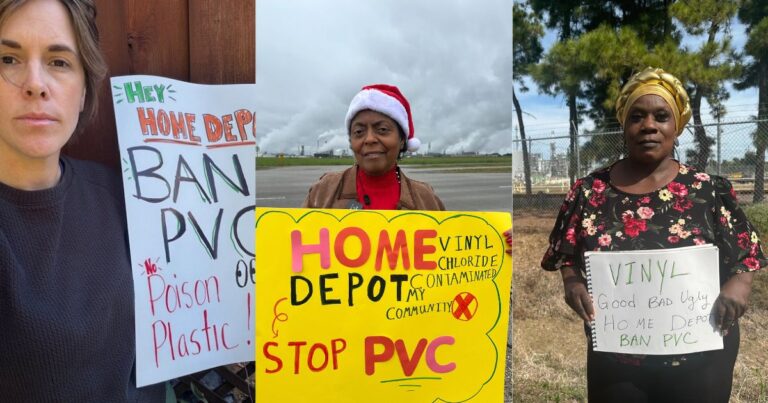
New research shows that product packaging at The Home Depot is rife with PVC, the poison plastic. Out of dozens of products analyzed across three stores, a majority were packaged in PVC plastic.
PVC plastic is made from vinyl chloride—a known human carcinogen associated with liver cancer, brain and lung cancers, and blood cancers. Production factories poison our air and water, and PVC products and packaging leach toxic additives into our bodies.
Meanwhile, incinerators and landfills turn even PVC disposal into a health hazard—especially for people in low-income communities of color, who are disproportionately impacted. People who live within three miles of PVC production and disposal facilities have an income 37% lower than the national average, and 63% of these residents are people of color.
Packaging home improvement products in PVC doesn’t improve our homes; it threatens our health, safety, and environment. Our new research shows that The Home Depot can and must do more to rid their stores of the poison plastic.
New in-store research reveals brand-name products packaged in PVC
We analyzed recycling labels on 87 products across a wide variety of product types in three Seattle-area stores, focusing on those using blister packaging—a common use for PVC plastic. These primarily included tools such as wrenches, screwdrivers, and saw blades, as well as replacement parts for electric and plumbing projects. We selected products where multiple brands offered competing options and blister packaging was common across brands.
A majority of the selected products (53%) were labeled as being packaged with PVC.
While the products we selected and analyzed are far from representative of all products within an individual store, let alone across geographic regions, the prevalence of PVC blister packaging is of great concern.
Nearly 62% of blister-packaged brand-name tools were packaged with PVC. Surprisingly, premium brands are among the worst offenders: Makita and Ryobi packaging was largely unlabeled, but every labeled product identified was packaged with PVC.
Most shocking of all, every single product examined from Milwaukee Tool, from screwdrivers to ballpoint pens, was packaged with PVC. Milwaukee products represented a sizable 28%of the total number of products examined in this research.
Safer solutions are readily available
It’s not all bad news. Where PVC exists in packaging, alternatives are already widely available—and actively in use! In fact, a majority of products packaged with PVC were shelved right next to competing products packaged without PVC—relying on preferred alternatives such as cardboard packaging.
This shouldn’t surprise The Home Depot, because many (but not all!) of those PVC-free packaged products are the company’s own private-label products.
The Home Depot previously phased out PVC in new private-label packaging, eliminating an estimated 81 million square feet of poison plastic from its supply chain in 2022 alone. Last spring, investors urged The Home Depot to go further and work with suppliers to eliminate PVC from all brand name packaging as well as building materials, which represent the largest use case for PVC. Jess Conard, a resident displaced by the 2023 East Palestine train derailment that released vinyl chloride, gave a powerful statement in support.
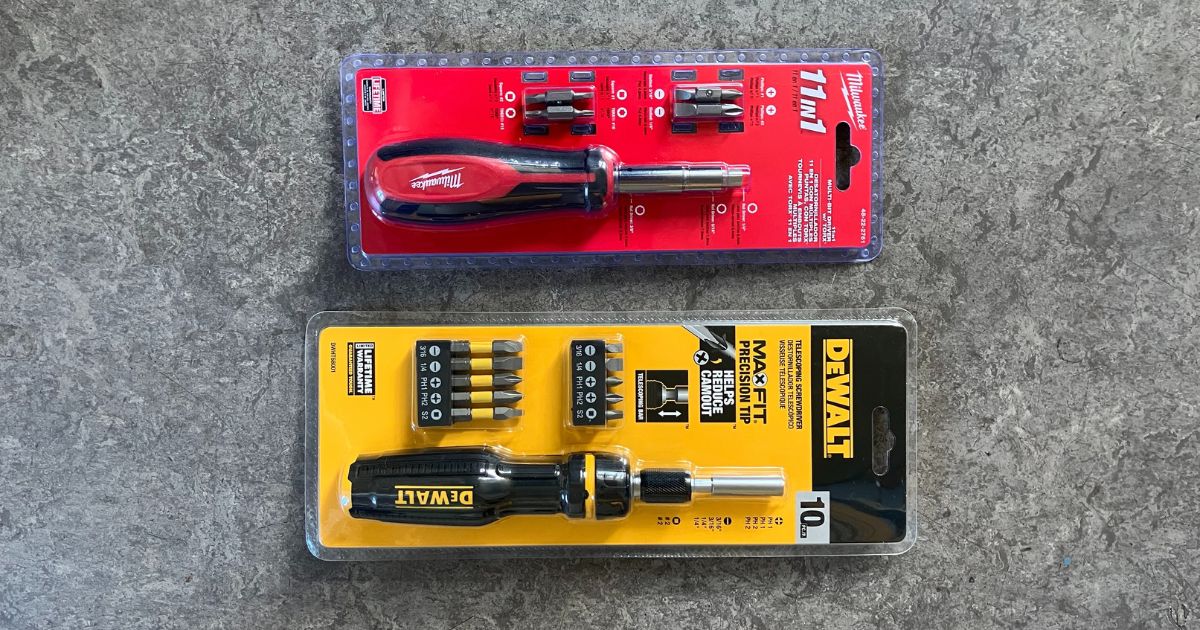
The images are stark: Side by side you have wrenches caged in toxic blister packaging, and wrenches attached to simple cardboard.
But despite its own commitment to reducing PVC packaging, The Home Depot’s in-store marketing prioritizes the worst PVC packaging offenders in brand name products. In all three stores, Milwaukee products were heavily featured in end caps and aisle displays, and Makita and Ryobi dominated end caps for tools in particular.
The Home Depot has been a leader in phasing PVC out of private-label packaging. So why won’t it set the same standards for brand name suppliers?
What can Home Depot do?
The Home Depot is far from powerless, especially as the nation’s largest home improvement retailer. The company regularly sets standards for its suppliers, from restricting phthalates in flooring to methylene chloride in paint removal products. It can also choose to encourage and require brand name suppliers to reduce and eliminate PVC packaging, just like they’ve done with their private brands.
This would also help the company and its suppliers keep ahead of regulations. Recently, Washington state identified PVC packaging as a plastic under consideration for restricting under the Safer Products for Washington law. Other states including California, Massachusetts, Minnesota, and New York are considering PVC restrictions as well.
The company has already committed to reducing plastics in its products and packaging by 200 million pounds by the end of 2028—an acknowledgment of both the scale of the plastic pollution crisis and its own role in addressing it. Phasing out PVC would help The Home Depot meet or even exceed that goal, while also protecting public health and mitigating business risks.
In fact, The Home Depot has a particularly close relationship with its supplier TTI, which owns both Milwaukee and Ryobi. The Home Depot was previously the exclusive U.S. distributor for several TTI brands, and has repeatedly awarded TTI with Partner of the Year awards, prompting the supplier’s CEO to cheer the “unrivaled depth of our relationship with The Home Depot.”
Friends don’t let friends poison their customers. The Home Depot should be using those relationships to help its suppliers catch up, sharing the company’s learnings from eliminating PVC in private-label packaging and driving its partners to make smarter, healthier choices for customers.
Note: In the above picture, the Milwaukee screwdriver is packaged using PVC, while the DeWALT screwdriver is not.

Mind the Store Program Manager
Dana Floberg is the Mind the Store program manager at Toxic-Free Future, challenging major corporations to adopt policies to reduce and eliminate dangerous chemicals.