Washington’s landmark Safer Products law was built on a commonsense principle: protect health by preventing toxic chemicals from contaminating our bodies, homes, workplaces, drinking water, and environment in the first place.
Safer Products for Washington (SPW) requires the Department of Ecology (Ecology) to identify priority chemicals and priority products every five years, determine whether safer solutions are available, and prevent contamination and disease before it happens.
That’s why the second cycle of SPW is so important. Ecology is taking a close look at priority toxic chemicals in a wide range of everyday products, and preliminary information from the agency points to an encouraging conclusion: for many of these uses, safer solutions are available.
There is real progress to celebrate. But Cycle 2 is also showing where there are both gaps and opportunities to make this groundbreaking law deliver even better results for Washingtonians.
The progress: Safer solutions are within reach
One of the most important aspects of SPW is that it answers the question: What are safer solutions to using toxic chemicals linked to cancer, infertility, and brain damage in products we use every day?
Increasingly, for many products the answer is clear.
According to recent updates from Ecology’s Cycle 2 work, safer, feasible options are available across several important product categories. Identification of safer solutions clears the way for the agency to turn this research into real health protections.
PFAS: Preventing the next generation of “forever chemical” pollution
Washington has already been a national leader in addressing PFAS, the highly persistent “forever chemicals” that have contaminated drinking water, people, wildlife, and communities across the country.
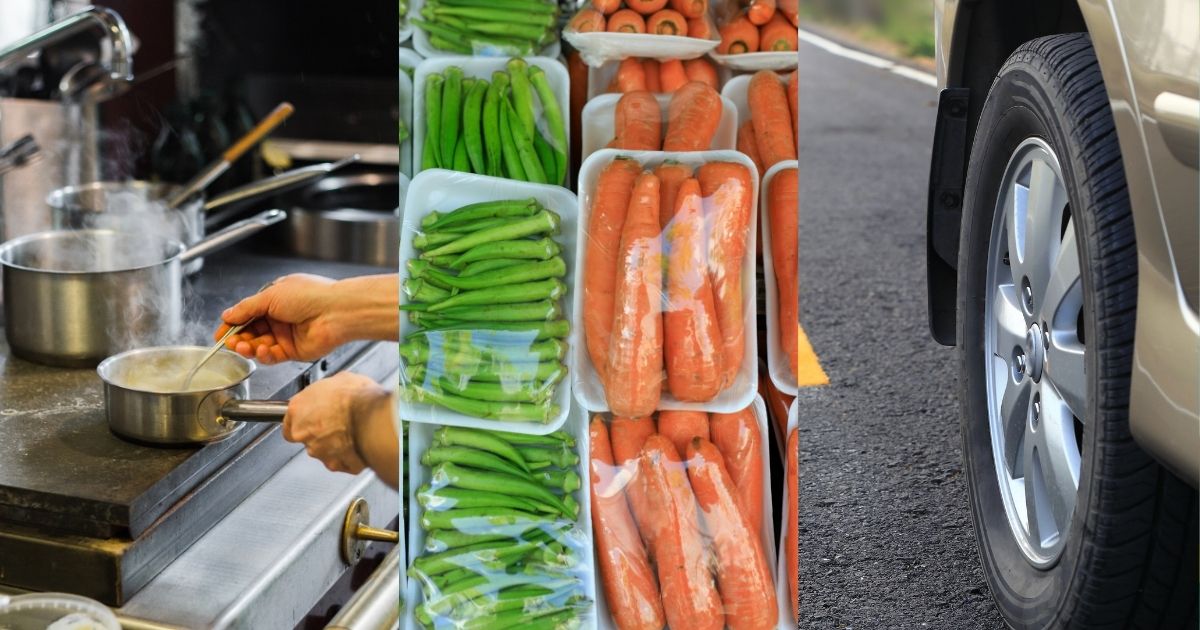
Ecology is evaluating PFAS in products including cookware and architectural paints. Preliminary findings indicate that safer solutions are available for the use of PFAS in these products.
We expect the cookware industry to fight a possible PFAS ban because we have seen it in other states from New York to California. Rather than fighting stronger protections by spending money on lobbyists, companies should focus on transitioning to safer alternatives. Six states, including Colorado, Connecticut, Maine, Minnesota, Rhode Island, and Vermont, have already banned PFAS in cookware. PFAS in paint could be phased out in Minnesota and Maine by 2032, unless it is exempted.
PFAS contamination has already cost Washington taxpayers tens of millions of dollars to address, and every PFAS-containing product that continues to enter the state adds to the problem. Ecology needs to stay on track to restrict PFAS in products as quickly as possible.
Cosmetics: Washington can keep pace with global action on siloxanes
Ecology is also examining D4, D5, and D6 siloxanes (cyclic volatile methyl siloxanes or cVMS) in cosmetics and personal care products.
Siloxanes are used in products people put directly on their bodies, including cosmetics, hair products, and skin care products.
And Washington isn’t alone in recognizing the problem. Europe is moving to restrict cVMS in cosmetics and other consumer and professional products.
That sends an important signal: companies serving the global marketplace are already being pushed toward safer options.
Toxic-Free Future’s own research shows that there are still products on store shelves with siloxanes. We conducted an independent analysis of ingredient labels for 577 products for textured hair sold at Sally Beauty, and cVMS were identified in 41 of 577, or about one in 14, of the hair products reviewed.
Ecology’s preliminary work indicating that safer alternatives are available gives Washington an opportunity to act. Washingtonians shouldn’t have fewer protections from harmful chemicals in cosmetics than consumers in Europe.
Building materials: Making the places where we live and work healthier
Some toxic exposures can come from products we rarely think about once they are installed.
In addition to PFAS in paint, Cycle 2 is making important progress on other toxic chemicals in building materials, including phthalates in sealants, caulks, and adhesives.
These products can remain in our homes, schools, workplaces, and other buildings for years or decades. They also affect workers who manufacture, install, renovate, and dispose of them.
Again, the emerging picture is encouraging: safer solutions exist. Toxic-Free Future has been working to advance safer sealants, particularly in affordable housing, and our 2023 research found phthalates in these products.
Washington has an opportunity to use its regulatory authority to help shift the building products market away from toxic chemicals—protecting workers and building occupants and preventing these chemicals from entering the waste stream and environment.
The gaps: Ecology needs to act on PVC packaging, and the legislature needs to act on 6PPD in tires
The biggest gap in Cycle 2 is PVC and PVDC plastic packaging.
Ecology identified PVC and PVDC as a priority for Cycle 2 but is currently proposing to delay consideration of restrictions until a future cycle.
That would be a major missed opportunity. Ecology is failing to deliver results that Washingtonians are demanding. More than 2,000 people and 36 organizations representing tens of thousands of people in Washington and beyond have asked for Ecology to move forward.
Washingtonians also strongly support action on harmful chemicals. A recent Pew poll found that 82% of Washington residents believe the government should do more to identify and regulate harmful chemicals in everyday products, and 90% are concerned about chemicals in food packaging.
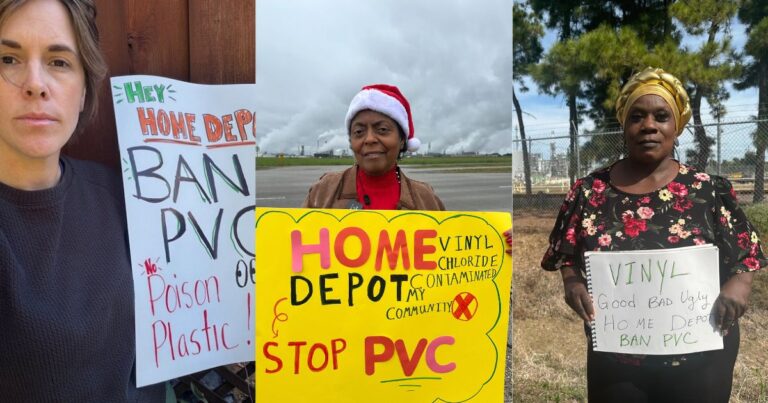
PVC is more than a plastic waste problem. It is a health and pollution problem throughout its lifecycle. PVC production relies on vinyl chloride, a known human carcinogen, and it can contain hazardous additives. PVC microplastics are found in organs, placenta, and blood.
Further, PVC manufacturing is a justice issue. Nearly half of the vinyl chloride made in the United States is produced in Louisiana, much of it in the heavily industrialized region known as “Cancer Alley.”
About 26 million pounds of PVC plastic packaging are used in Washington every year, according to Ecology.
Most importantly, Ecology has already done tremendous work to identify safer options. Now it needs to finish the job.
Companies are already eliminating PVC packaging; Home Depot, Lowe’s, Target, and TJX have all phased out PVC packaging from their private-label products. Alternatives are already widely used across the marketplace. SPW is designed to restrict harmful chemicals and materials when safer solutions are available, and PVC packaging is exactly the kind of problem the program should be solving.
Waiting another cycle means more unnecessary PVC packaging entering Washington every year—and ultimately becoming a health and cost problem for communities. Take action and tell Ecology to act on PVC packaging!
6PPD: The legislature needs to act
6PPD, widely used in tires, has become a high-priority chemical in recent years due to the discovery that it comes out of tires in dust and breaks down into 6PPD-Q, which kills coho salmon. Ecology has not identified a safer solution because alternatives are still in development and not yet used in tires.
That makes 6PPD fundamentally different from PVC. For PVC packaging, safer, feasible, available alternatives exist. For 6PPD, the limits of current law mean Ecology cannot solve the problem on its own.
But the legislature can—and should—act. It should set a clear 2035 deadline to phase out 6PPD in tires and give Ecology authority to prevent regrettable substitutes. A firm deadline would give tire manufacturers the certainty and incentive to innovate, while ensuring Washington doesn’t replace one salmon-killing chemical with another hazardous alternative. The legislature considered exactly this approach in 2026 through HB 2421, which would have established a 2035 prohibition on 6PPD and regrettable substitutes.
6PPD-Q not only kills coho salmon, it can pose reproductive hazards to human health. This is especially important when tire pellets are used in artificial plastic turf for playing fields and playgrounds. We should not have to wait for a safer replacement to be in use before setting a deadline to end its use.
What comes next: Take regulatory action
When Ecology’s analysis shows that safer solutions are available, the next step should be clear: move forward with strong protections. That means Ecology should:
- Finalize meaningful restrictions on PFAS, siloxanes, phthalates, and other priority chemicals where safer options are available.
- Finish the job on PVC packaging.
Ecology has both the resources and the expectation to fully use the authority the legislature gave it.
The real measure of Safer Products for Washington isn’t how many chemicals the state studies.
It’s how much toxic pollution it prevents through restrictions.

Executive Director
Laurie Valeriano is Toxic-Free Future's Executive Director. Laurie has worked at Toxic-Free Future for over 25 years, working to advance precedent-setting state environmental health policies that protect people and the environment.